Endoscopic spine surgery (ESS) represents a major advancement in the management of spinal disorders, offering a minimally invasive alternative to conventional open and microscopic techniques. With continuous improvements in optics, instrumentation, and surgical expertise, ESS has expanded its indications from simple lumbar disc herniation to complex degenerative, cervical, thoracic, and revision spinal pathologies. The benefits of endoscopic spine surgery are multifaceted, encompassing surgical, clinical, economic, and patient-centered outcomes.
-
Minimal Tissue Disruption
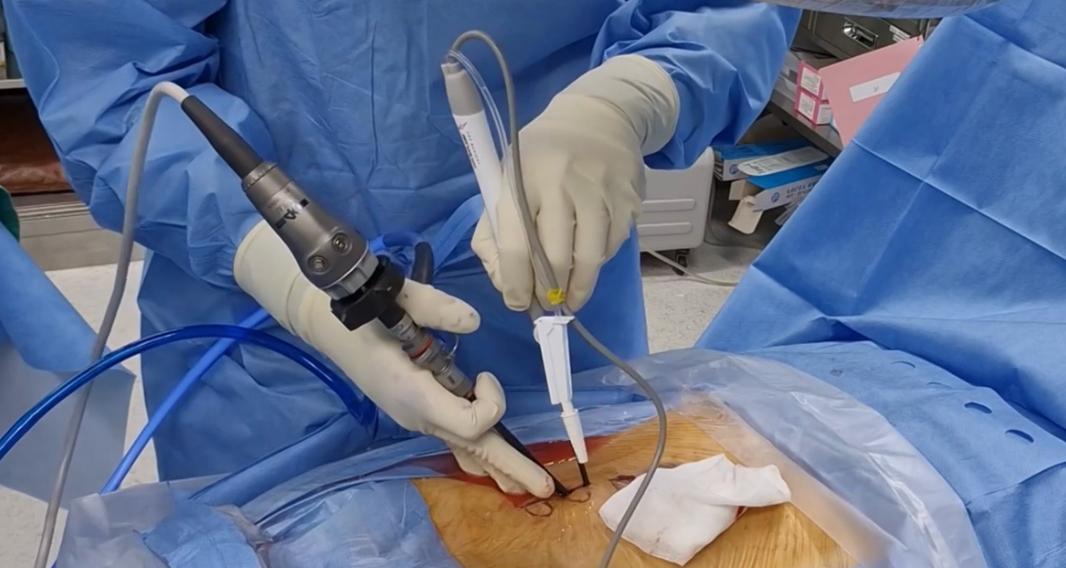
One of the most significant advantages of endoscopic spine surgery is minimal damage to paraspinal muscles, ligaments, and bony structures. ESS utilizes small skin incisions, typically 7–10 mm, and dilatational access rather than muscle stripping. Preservation of normal anatomy reduces muscle ischemia, denervation, and postoperative fibrosis, which are commonly associated with open surgery. This tissue-sparing approach translates into reduced postoperative pain and faster functional recovery.
-
Reduced Blood Loss and Surgical Morbidity
ESS is associated with minimal intraoperative blood loss due to limited exposure and continuous saline irrigation, which provides tamponade of epidural bleeding. Reduced blood loss lowers the risk of transfusion-related complications and makes ESS particularly advantageous in elderly patients, those with anemia, or patients with multiple medical comorbidities. Overall surgical morbidity, including wound-related complications and infections, is significantly lower compared to open spine surgery.
-
Superior Visualization and Targeted Decompression
Modern endoscopic systems provide high-definition, magnified visualization with direct illumination of the surgical field. The endoscope allows close-up views of neural structures, disc fragments, and foraminal anatomy, enabling precise and targeted decompression. Angled lenses facilitate visualization around corners, which is often difficult with traditional microscopic techniques. This enhanced visualization helps in achieving adequate decompression while preserving stabilizing structures.
-
Reduced Postoperative Pain and Analgesic Requirement
Because ESS minimizes muscle injury and soft tissue trauma, patients experience significantly less postoperative pain. This leads to reduced dependence on opioid analgesics and other pain medications, an important advantage in the context of growing concerns regarding opioid overuse. Early pain relief also facilitates faster mobilization and rehabilitation.
-
Faster Recovery and Early Return to Activity
Patients undergoing endoscopic spine surgery typically mobilize within hours of surgery. Hospital stays are markedly shorter, with many procedures being performed as day-care or short-stay surgeries. Early ambulation and rapid recovery allow patients to return to daily activities and work much sooner than with conventional open procedures, resulting in improved patient satisfaction and reduced socioeconomic burden.
-
Preservation of Spinal Stability
By limiting bone resection and preserving facet joints, ligaments, and paraspinal musculature, ESS helps maintain native spinal biomechanics. This is particularly important in preventing postoperative instability and reducing the need for fusion procedures. In conditions such as lumbar disc herniation and foraminal stenosis, ESS achieves effective decompression while maintaining spinal motion segments.
-
Applicability Under Regional or Local Anesthesia
Many endoscopic spine procedures can be safely performed under local or regional anesthesia with conscious sedation. This is especially beneficial for elderly patients or those with significant cardiopulmonary comorbidities who may not tolerate general anesthesia well. Intraoperative patient feedback during awake surgery can also enhance neural safety.
-
Lower Infection and Complication Rates
Small incisions, reduced dead space, and continuous irrigation contribute to a lower risk of surgical site infections. Additionally, the reduced surgical stress response leads to fewer systemic complications. Studies have consistently shown lower rates of dural tears, wound complications, and postoperative infections with ESS when performed by trained surgeons.
-
Cost-Effectiveness
Although the initial investment in endoscopic equipment is high, overall treatment costs are often lower due to shorter hospital stays, reduced medication use, faster return to work, and fewer complications. From a health economics perspective, ESS offers significant long-term cost benefits for both healthcare systems and patients.
-
Expanding Indications and Versatility
Originally limited to lumbar disc herniation, endoscopic spine surgery is now successfully applied to lumbar canal stenosis, foraminal and extraforaminal disc herniations, recurrent disc disease, cervical radiculopathy, thoracic disc herniations, infections, and even selected cases of spinal tumors. Techniques such as uniportal and biportal endoscopy have further expanded the versatility of ESS.
Conclusion
Endoscopic spine surgery represents a paradigm shift in modern spine care, aligning surgical goals with the principles of minimal invasiveness, precision, and rapid recovery. Its benefits—ranging from reduced tissue trauma and postoperative pain to faster rehabilitation and preservation of spinal stability—make it an attractive option for both patients and surgeons. With increasing surgeon experience, technological refinement, and growing evidence supporting its efficacy and safety, endoscopic spine surgery is poised to play a central role in the future of spinal disorder management.