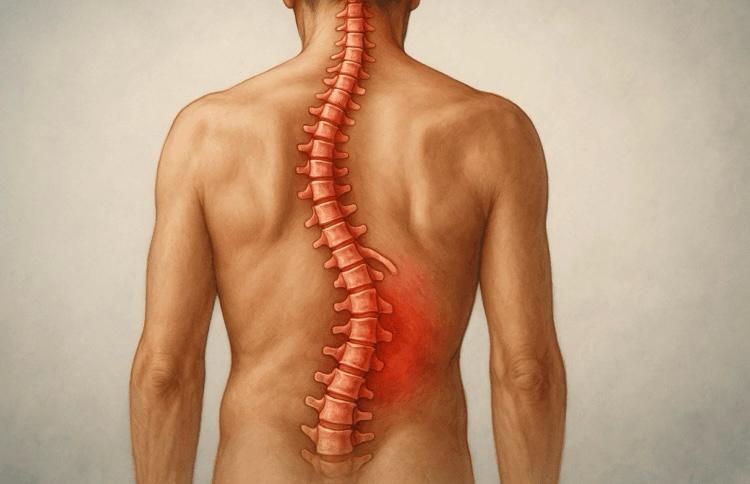
Scoliosis and other spinal deformities represent a diverse group of conditions characterized by abnormal curvature and alignment of the spine, leading to cosmetic deformity, pain, functional limitation, and, in severe cases, cardiopulmonary compromise. These disorders may present in childhood or adulthood and vary widely in etiology, severity, and progression. Advances in diagnostic techniques and surgical management have significantly improved outcomes for patients with spinal deformities.
Definition and Classification
Scoliosis is defined as a three-dimensional deformity of the spine with a coronal plane curvature greater than 10 degrees, as measured by the Cobb angle, accompanied by vertebral rotation and sagittal plane alterations. Spinal deformity is a broader term that includes kyphosis, lordosis, sagittal and coronal imbalance, and complex multiplanar deformities.
Scoliosis is commonly classified based on etiology into:
- Idiopathic scoliosis, which accounts for the majority of cases and is subdivided into infantile, juvenile, and adolescent idiopathic scoliosis.
- Congenital scoliosis, resulting from vertebral formation or segmentation anomalies.
- Neuromuscular scoliosis, associated with conditions such as cerebral palsy, spinal muscular atrophy, and muscular dystrophy.
- Degenerative scoliosis, typically seen in adults due to asymmetric disc degeneration and facet arthropathy.
- Syndromic scoliosis, associated with connective tissue or genetic disorders.
-
Pathophysiology
Spinal deformities develop due to an imbalance between growth, muscular forces, and spinal stability. In scoliosis, vertebral rotation and asymmetric loading lead to progressive curvature, rib hump formation, and truncal imbalance. In adults, degenerative changes contribute to lateral listhesis, spinal stenosis, and sagittal imbalance, often accompanied by pain and neurological symptoms.
-
Clinical Presentation
The clinical manifestations of scoliosis and spinal deformity depend on patient age, etiology, and curve magnitude. In children and adolescents, deformity and cosmetic concerns are common presenting features. In contrast, adults often present with back pain, radiculopathy, neurogenic claudication, and functional disability. Severe deformities may impair pulmonary function and reduce quality of life.
-
Evaluation and Imaging
A thorough clinical examination includes assessment of shoulder and pelvic asymmetry, trunk shift, rib prominence, and sagittal alignment. The Adam’s forward bend test is a key screening tool. Radiographic evaluation with standing full-length posteroanterior and lateral spine radiographs is essential for assessing curve magnitude, balance, and progression. Advanced imaging such as MRI is indicated in atypical curves, neurological deficits, or early-onset scoliosis to rule out intraspinal pathology. CT scanning is useful for detailed bony anatomy and surgical planning.
-
Nonoperative Management
Nonoperative treatment plays a vital role, particularly in skeletally immature patients and those with mild to moderate deformities. Observation is recommended for small, nonprogressive curves. Bracing is effective in slowing curve progression in adolescent idiopathic scoliosis when used appropriately. Physiotherapy, including scoliosis-specific exercises, may improve posture and function, although its role in curve correction remains limited. In adults, conservative management focuses on pain relief and functional improvement.
-
Surgical Management
Surgical intervention is considered for progressive deformities, severe curves, neurological compromise, or significant pain and disability. The goals of surgery include curve correction, restoration of coronal and sagittal balance, neural decompression, and spinal stabilization. Posterior spinal fusion with instrumentation remains the gold standard for most deformities. Advanced techniques such as osteotomies, vertebral column resection, growth-friendly instrumentation, and minimally invasive approaches have expanded the scope of deformity correction while improving safety and outcomes.
-
Complications and Outcomes
Surgery for scoliosis and spinal deformity is complex and carries risks, including neurological injury, infection, implant failure, and pseudoarthrosis. However, with modern techniques, neuromonitoring, and multidisciplinary care, outcomes have significantly improved. Successful deformity correction leads to enhanced function, pain relief, improved appearance, and better quality of life.
Conclusion
Scoliosis and spinal deformity are complex conditions requiring a comprehensive, individualized approach to diagnosis and management. Early detection, careful monitoring, and timely intervention are crucial in preventing progression and complications. With continued advancements in surgical techniques and understanding of spinal biomechanics, the management of spinal deformities continues to evolve, offering improved outcomes and quality of life for affected patients.